Your Neighborhood Lawn Care Provider.

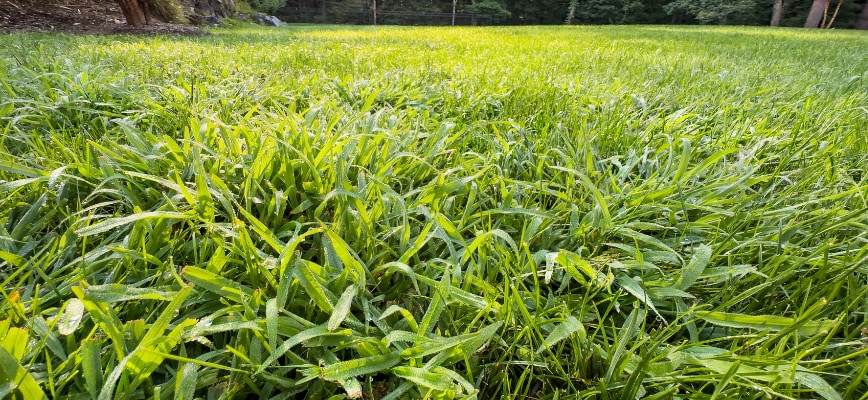
Maryland's Early Spring Weeds: Identification & Prevention Before They Spread
- On March 26 2026
As Maryland lawns begin to wake up from winter dormancy, so do the weeds.
In fact, early spring weeds in Maryland often begin germinating before most homeowners even think about mowing. If left untreated, these aggressive invaders quickly spread, compete with turfgrass for nutrients, and create thin, patchy areas that invite even more weed pressure later in the season.
Some weeds — like crabgrass and Japanese stiltgrass — are especially problematic throughout Maryland because they spread rapidly and produce thousands of seeds if left unchecked. Others, such as chickweed, henbit, and annual bluegrass, establish themselves early and weaken turf before the growing season even begins.
The key to protecting your lawn is early identification and prevention. Understanding which weeds are common in Maryland and how they spread allows homeowners to stop infestations before they take over the lawn.
Let's break down the most common early spring weeds in Maryland lawns, how to identify them, and what you can do to prevent them from spreading.
Why Early Spring Weeds Are So Aggressive in Maryland
Maryland's transitional climate creates ideal conditions for early-season weed growth:- Fluctuating soil temperatures.
- Frequent spring rainfall.
- Mild winter periods.
- Freeze-thaw cycles that weaken turf.
While cool-season grasses like tall fescue are just beginning to green up, weeds are already establishing root systems. By the time you see them clearly, they may already be well anchored.
1. Crabgrass (The Summer Problem That Starts in Spring)
Type: Annual grassy weedGermination: When soil temperatures reach ~55°F for several consecutive days
Why it matters: One plant can produce thousands of seeds
Crabgrass doesn't appear overnight in summer — it begins germinating in early to mid-spring. Maryland's warming soils (especially in central and southern counties) often reach germination range sooner than homeowners expect.
Prevention Strategy:
- Apply a pre-emergent weed control before soil temps consistently hit 55°F.
- Maintain thick turf through fertilization.
- Avoid mowing too short (thin lawns invite crabgrass).
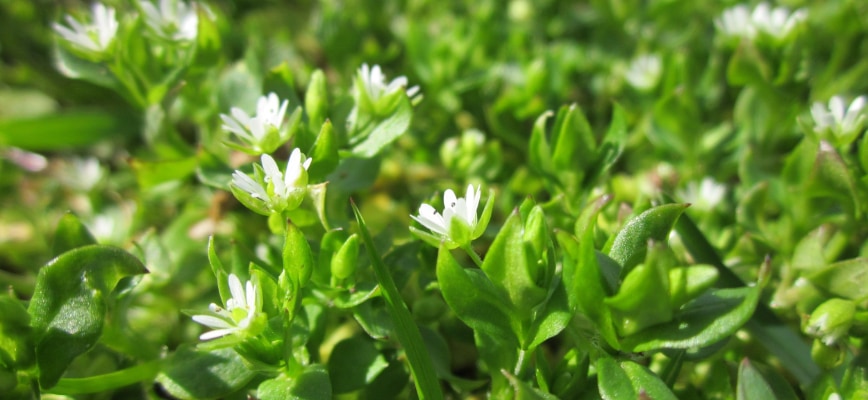
2. Chickweed (Low-Growing and Fast-Spreading)
Type: Winter annual broadleafAppearance: Small white star-shaped flowers, low mat growth
Growth pattern: Spreads quickly in cool, moist soil
Chickweed often survives winter and explodes in early spring. It forms dense mats that crowd out desirable turf and can spread rapidly across thin areas.
Prevention Strategy:
- Early spring broadleaf weed control.
- Improve drainage in overly moist lawn sections.
- Strengthen turf density through proper fertilization.
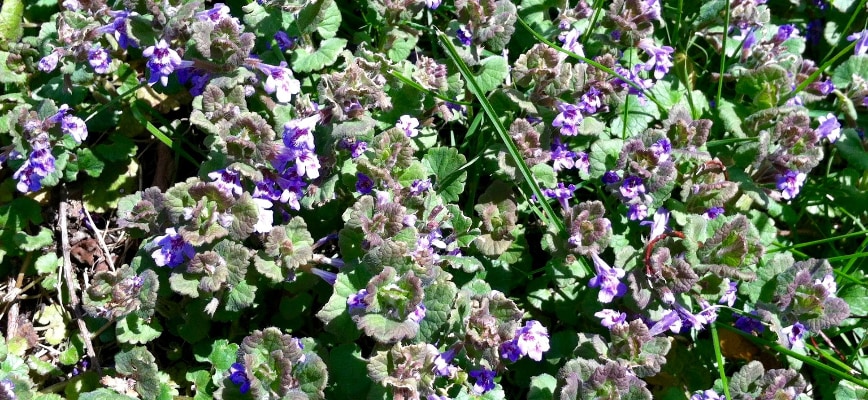
3. Henbit (Purple Flowers in Early Spring)
Type: Winter annualAppearance: Purple tubular flowers, square stems
Common timing: Visible March-April in Maryland
Henbit is often mistaken for a “wildflower,” but it spreads aggressively and competes for nutrients and sunlight.
Prevention Strategy:
- Early-season broadleaf control.
- Maintain proper mowing height (3-3.5 inches for tall fescue).
- Avoid compacted soil conditions.
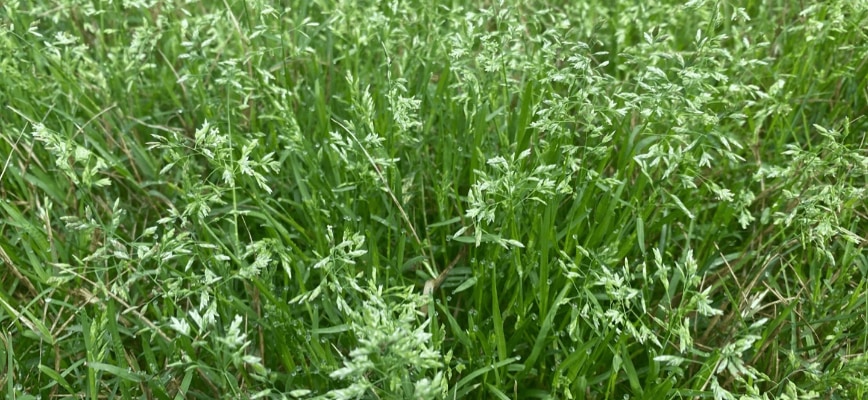
4. Annual Bluegrass (Poa annua)
Type: Winter annual grassy weedAppearance: Light green patches with small white seed heads
Problem: Produces seed very early in the season
Annual bluegrass thrives in compacted soils and thin turf. By spring, it's already producing seed heads — meaning next year's infestation is being set in motion.
Prevention Strategy:
- Fall and early spring pre-emergent applications.
- Core aeration to reduce compaction.
- Consistent lawn health program.
5. Japanese Stiltgrass
Type: Summer annual grassy weedAppearance: Light green, delicate blades with a distinctive silvery stripe running down the center of the leaf
Problem: Spreads aggressively in shaded and thin turf areas, producing thousands of seeds that remain viable in the soil for years
Japanese stiltgrass (Microstegium vimineum) has become one of the most problematic invasive grasses in Maryland lawns, especially near wooded areas or properties with partial shade. It often appears as loose, pale-green patches that grow rapidly during the summer months and crowd out desirable turfgrass. Once established, stiltgrass can spread quickly and continue reseeding itself year after year if not addressed early.
Prevention Strategy:
- Early spring pre-emergent applications with Dimension (dithiopyr).
- Strengthening turf density through fertilization.
- Improving sunlight and airflow in shaded lawn areas.
- Maintaining a consistent lawn care program to prevent thin turf.
Why Early Prevention Is More Effective Than Late Treatment
When homeowners wait until weeds are visible and widespread, control becomes:- More expensive
- More product-intensive
- Less effective
At AgroLawn, our Maryland-specific fertilization and weed control programs are designed around:
- Local soil temperatures
- Chesapeake Bay climate patterns
- Cool-season turf varieties common in Maryland
How Homeowners Can Help Prevent Early Spring Weeds
Between professional visits, you can strengthen your lawn by:- Mowing at the correct height (never scalp in early spring)
- Watering deeply but infrequently
- Avoiding heavy foot traffic on soft soil
- Cleaning mower blades to prevent weed seed spread
Don't Let Early Spring Weeds Define Your Summer Lawn
Early spring weeds like crabgrass, chickweed, henbit, annual bluegrass, and Japanese stiltgrass can quickly take over Maryland lawns if they aren't addressed early in the season.The good news is that most of these weeds are far easier to prevent than to eliminate once they mature. Early pre-emergent treatments, proper fertilization, and a thick, healthy lawn create the best defense against invasive weeds.
At AgroLawn, we monitor Maryland soil temperatures, weather patterns, and local growing conditions to time treatments correctly. Our lawn care programs are designed to prevent invasive weeds like crabgrass and stiltgrass before they establish while strengthening turfgrass for long-term lawn health.