Your Neighborhood Lawn Care Provider.
Why Core Aeration Improves Nutrient Uptake More Than Any Other Lawn Service
- On September 15 2026
Homeowners often think of fertilizer as the primary way to feed a lawn. While proper fertilization is essential, nutrients can only
benefit your grass if they can actually reach the root zone and be absorbed by the plant.
Compacted soil can stand in the way.
That's one reason core aeration improves nutrient uptake so effectively. Instead of simply adding something to the lawn, aeration
changes the physical conditions within the soil, creating pathways that allow water, oxygen, and nutrients to move more easily into the
root zone.
For Maryland lawns recovering from summer heat, drought stress, foot traffic, and compacted soil, that can make a significant
difference heading into fall.
What Happens When Lawn Soil Becomes Compacted?
Healthy turf needs more than sunlight and fertilizer. Grass roots also require oxygen, moisture, nutrients, and enough pore space within the soil to grow.Over time, everyday activity can compress the soil beneath your lawn. Foot traffic, children playing, pets, lawn equipment, and even repeated rainfall can contribute to compaction. Maryland soils with higher clay content can be particularly prone to becoming dense.
As soil particles are pushed closer together, the open spaces that normally hold air and water become smaller. This makes it more difficult for water and nutrients to penetrate deeply into the soil.
You may continue fertilizing and watering, but your lawn might not be able to use those resources as efficiently as it should.
How Does Core Aeration Help?
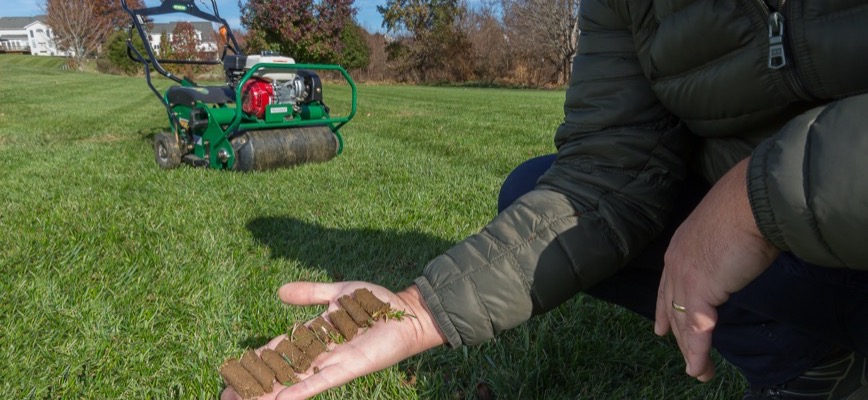
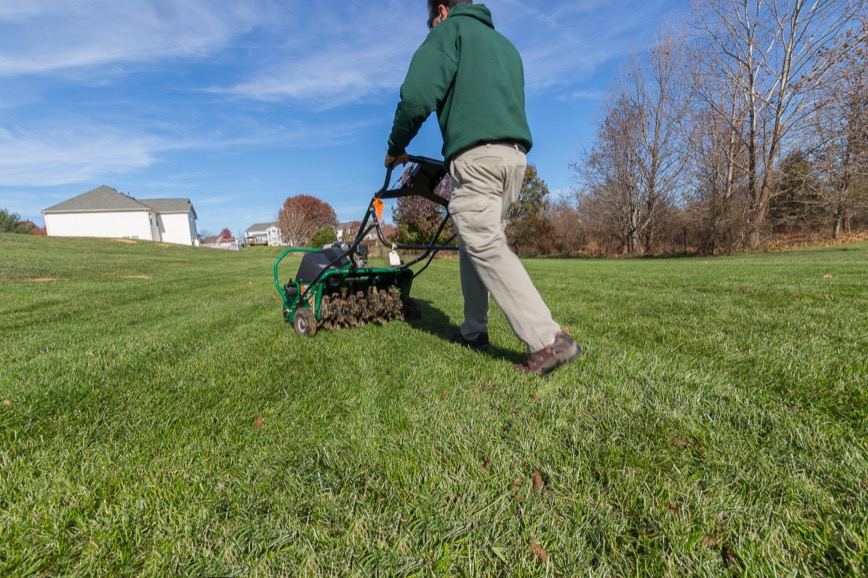
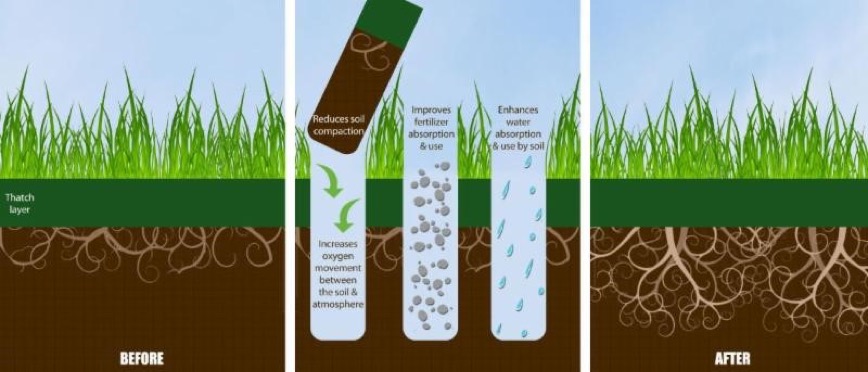
Core aeration uses specialized equipment to remove small plugs, or cores, of soil from the lawn. These openings temporarily relieve compaction and create channels through the soil.Those channels help:
- Increase oxygen movement into the root zone
- Improve water infiltration
- Allow nutrients to penetrate deeper into the soil
- Encourage stronger and deeper root development
- Reduce excessive thatch accumulation
- Create better conditions for seed-to-soil contact when paired with overseeding
Unlike treatments that address only what is happening above the soil surface, aeration improves the environment where much of your lawn's growth actually begins: around its roots.
Why Core Aeration Improves Nutrient Uptake
Think of fertilizer as the food and the root system as the lawn's delivery network. Adding more fertilizer doesn't necessarily help if that delivery network is struggling.By relieving soil compaction, core aeration improves nutrient uptake because fertilizer, water, and oxygen have a better opportunity to reach actively growing roots.
This is especially valuable when aeration is coordinated with fall lawn treatments. Grass entering its fall growth period can direct nutrients toward root development and energy storage rather than simply supporting top growth.
A healthier root system can also explore a larger volume of soil, giving the plant greater access to naturally occurring nutrients and moisture.
In other words, aeration doesn't replace fertilization. It can help your lawn make better use of it.
Why Fall Is an Ideal Time to Aerate Maryland Lawns
For cool-season lawns common throughout Maryland, late summer into early fall provides excellent conditions for recovery and growth.Summer can be difficult on turf. Heat, periods of limited rainfall, heavy backyard activity, and mowing traffic can leave soil compacted and grass stressed. As temperatures begin to moderate, turf enters an important recovery period.
Core aeration helps prepare the soil for that recovery.
Pairing aeration with overseeding can be particularly effective because the openings created during aeration improve seed-to-soil contact while existing turf benefits from reduced compaction. Newer grass varieties can help improve overall lawn density and replace turf that has thinned during summer.
Aeration Helps Other Lawn Services Work Together
One of the biggest benefits of aeration is that it complements other good lawn care practices.Fertilization supplies important nutrients. Overseeding introduces new grass plants. Proper irrigation provides moisture. Soil amendments can address specific soil conditions.
Aeration helps improve the environment in which all of those practices have to work.
That is why core aeration improves nutrient uptake while also supporting better water movement, root growth, and seed establishment. Rather than treating a single symptom, it addresses one of the underlying physical limitations that can keep a lawn from reaching its potential.
Give Your Lawn Better Access to What It Needs
A healthy lawn isn't just about what you put on the grass. It's also about what can get into the soil.If your lawn has compacted areas, thinning turf, poor water infiltration, or difficulty recovering from summer stress, core aeration may be an important part of your fall lawn care plan.
At AgroLawn, we can help prepare your Maryland lawn for stronger fall growth with professional core aeration and seeding services designed to improve soil conditions and encourage healthier turf from the roots up.
Ready to give your lawn some breathing room? Contact AgroLawn today at 410-997-1742 to schedule your fall core aeration and seeding service.